DESIGN WITHOUT BOUNDARIES
One architectural language. Inside and out.
Great design doesn’t stop at the door.
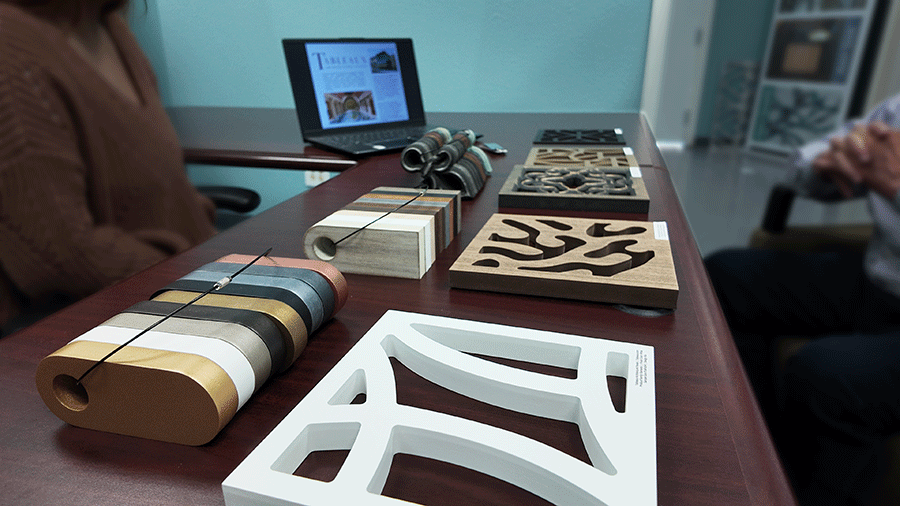
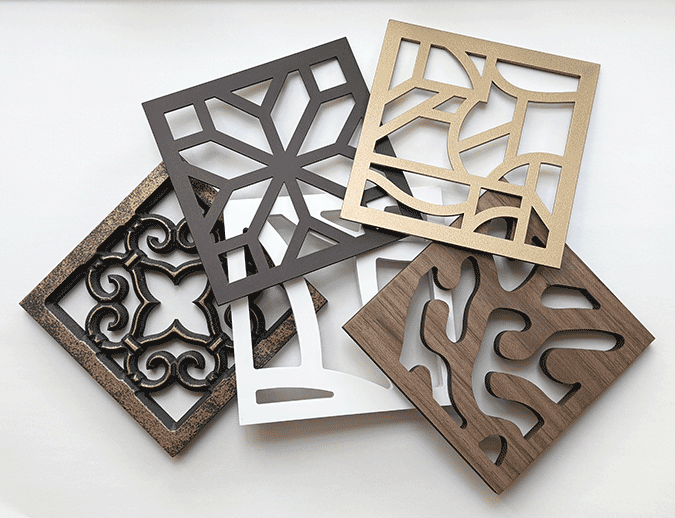
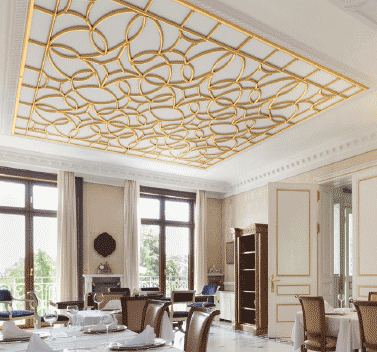
Tableaux™ architectural panels give designers a distinctive way to carry pattern, texture and visual rhythm throughout a project—from interior spaces to exterior environments.
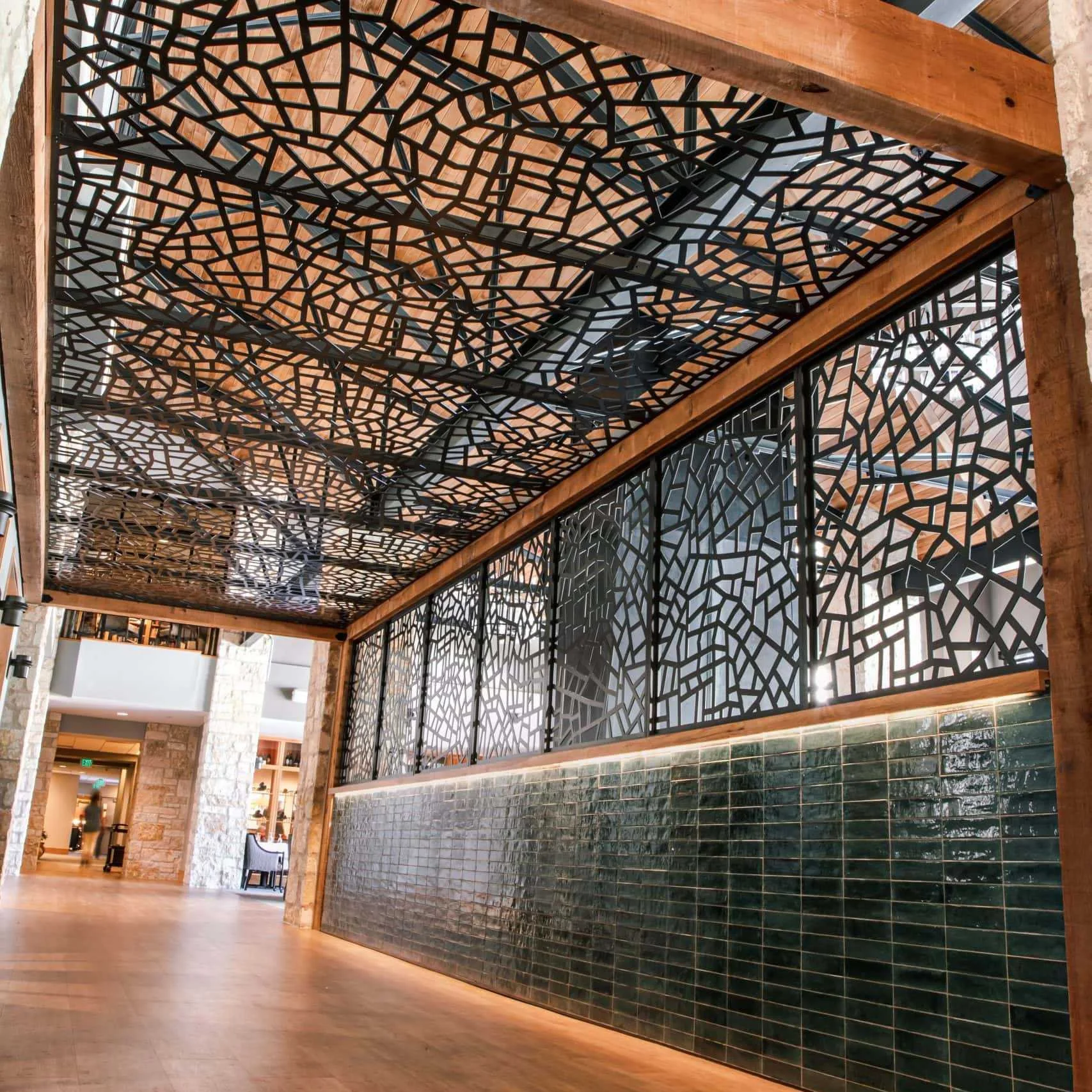
Used as screens, partitions, railings, privacy elements or integrated architectural features, Tableaux panels interact with light, shadow, landscape and the surrounding materials to become part of the architecture itself.
FROM INTERIOR SPACE TO EXTERIOR ENVIRONMENT
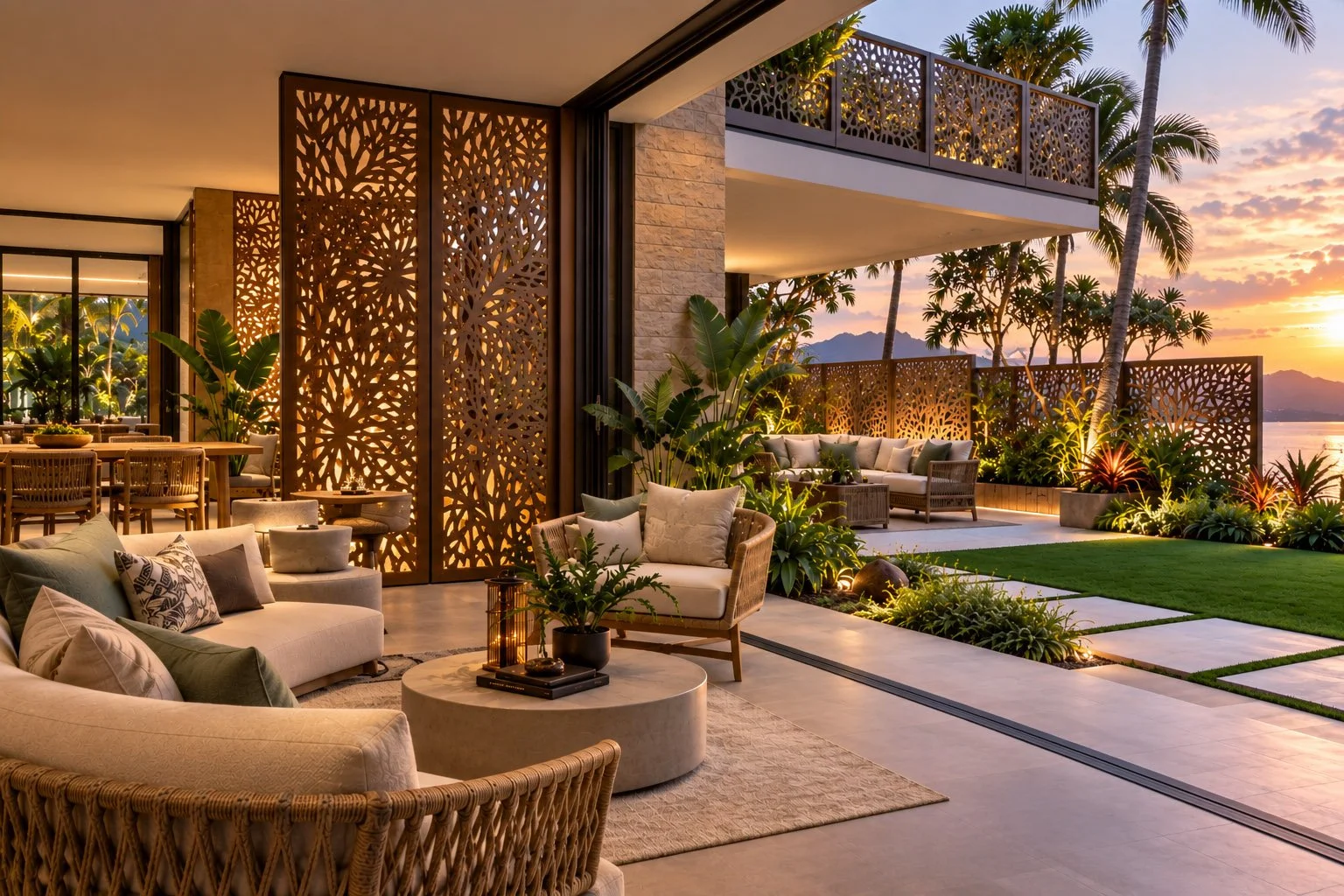
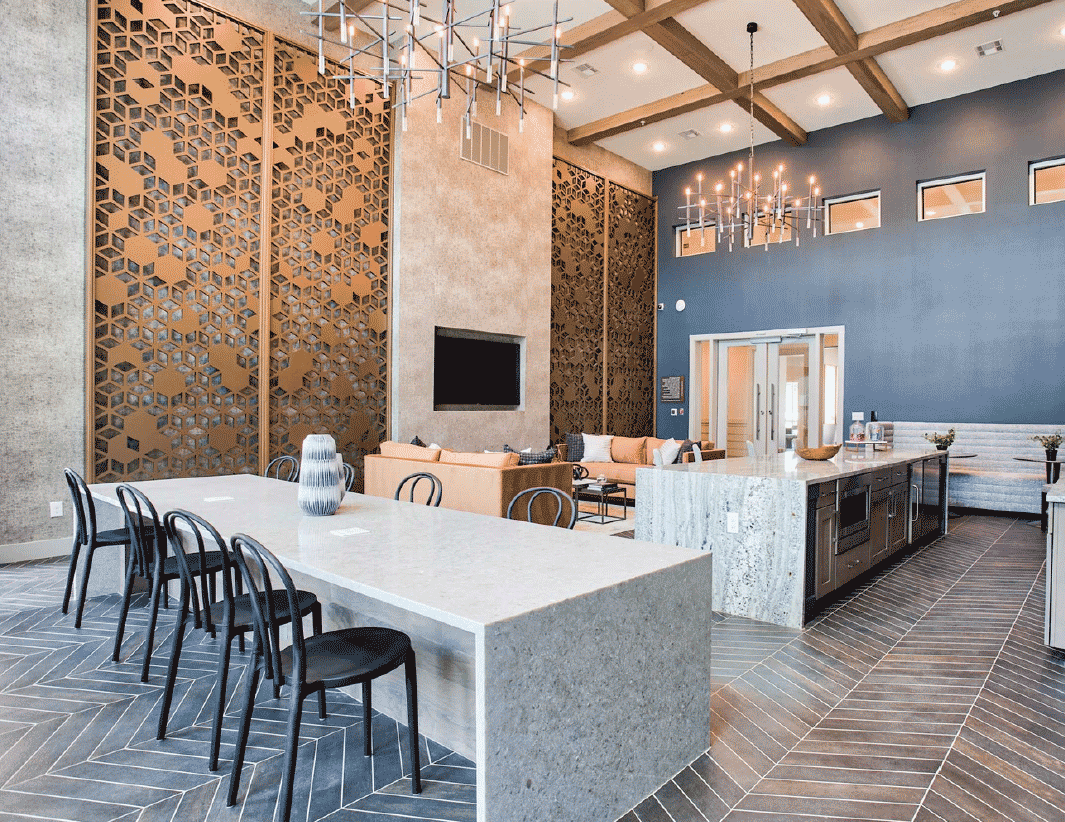
Inside, Tableaux can define space without completely closing it off. Decorative screens and partitions create separation while maintaining openness, allowing light and views to move through the environment.
Move outside, and that same design language can continue into balconies, terraces, courtyards and landscaped spaces.
The result is a project that feels considered as a whole—not a collection of unrelated interior and exterior elements.
PATTERN WITH A PURPOSE
Tableaux panels can do more than create a visual statement.
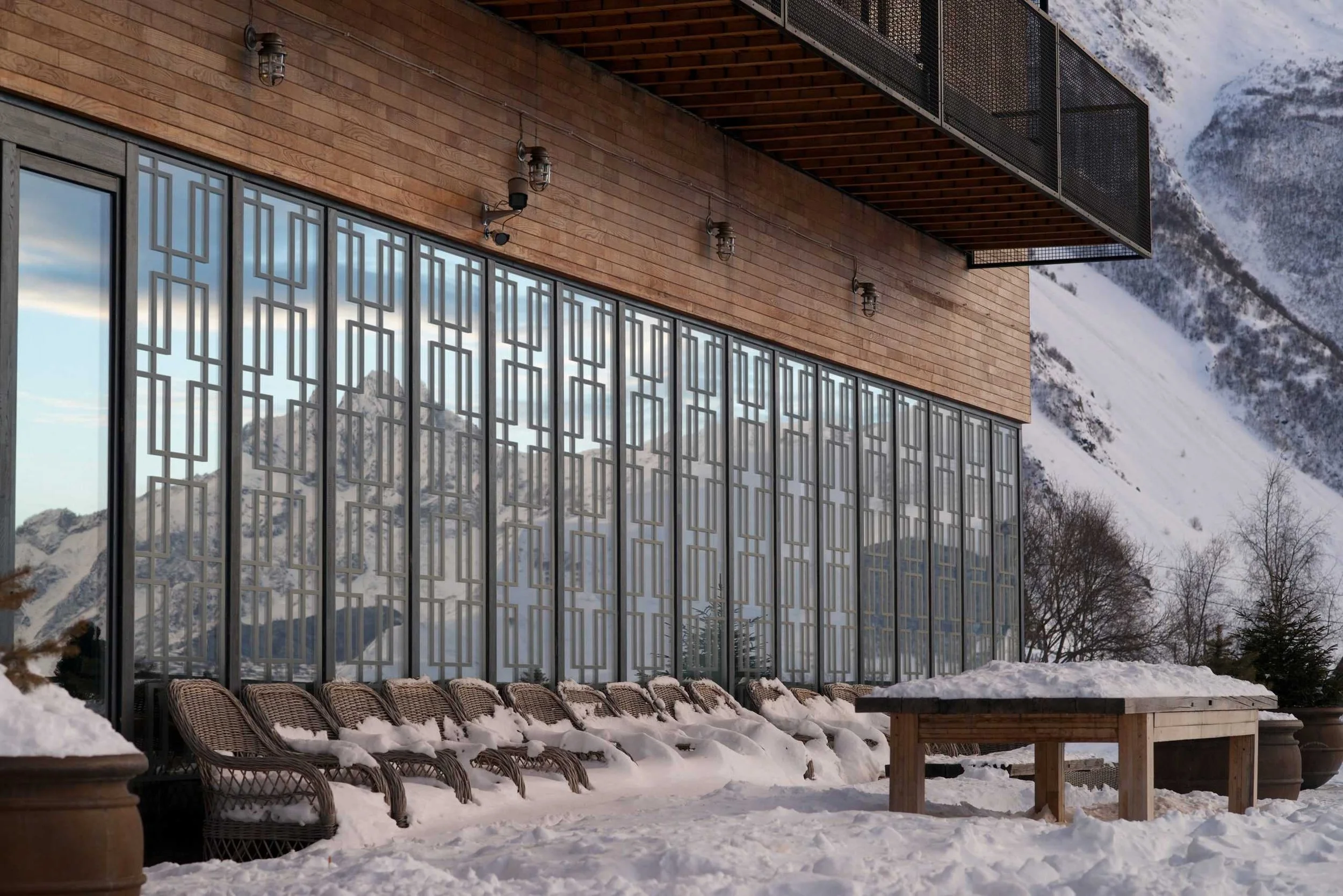
Depending on the application, they can provide privacy, screening, separation and architectural definition while introducing another layer of pattern and texture.
Applications include:
Interior screens and partitions
Feature walls and architectural accents
Exterior privacy screens
Balcony and railing applications
Courtyard and terrace features
Landscape screening
Hospitality and amenity spaces
Custom patterns and configurations


DESIGNED TO WORK WITH THE ARCHITECTURE
One of the strengths of Tableaux is its ability to complement the other materials within a project.
Stone. Wood. Glass. Metal. Plant material. Natural light.
Rather than competing with these elements, the panels can become the connective layer between them—particularly in spaces where architecture and landscape begin to overlap.
During the day, pattern and shadow continually change with the light. In the evening, integrated or landscape lighting can transform the same panel into an entirely different architectural experience.
INSIDE LOOKING OUT. OUTSIDE LOOKING IN.
The most successful indoor-outdoor environments blur the boundary between the two.
A screen introduced within an interior can reappear as an exterior privacy element. A pattern used along a terrace can continue into the landscape. A balcony or railing can become an architectural feature rather than simply a necessity.
Tableaux gives designers another tool for creating that continuity.
Specify Tableaux wherever the architecture calls for something more than a wall.
Contact CPS Garten to discuss applications, patterns, samples and specification assistance for your next project.
We appreciate the opportunity to be of service. Schedule your Tableaux PK / Lunch and Learn Today!